HUGO SEQUIER

Controlled AI Workflow Diagnostic

Know whether your AI workflow is ready for a controlled pilot.

Evaluate one workflow's value, failure cases, permissions, and recovery controls, before committing to production integration.

Duration
10 business days
Fixed scope
€4,000 tax excluded
Assess your workflow

If the evidence supports moving forward, the next step is a separately scoped controlled pilot. There is no obligation to continue.

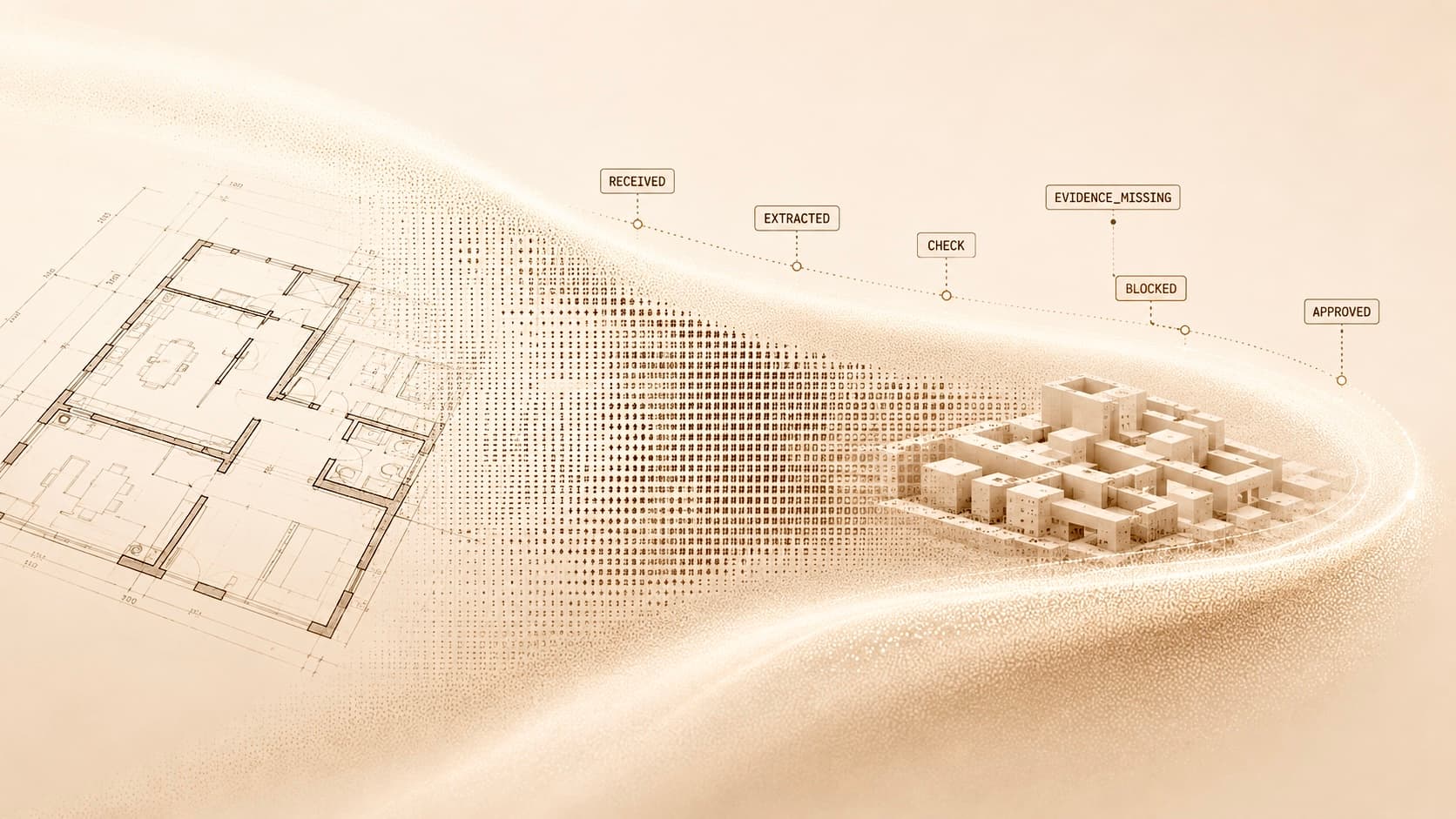
Workflow: input document → model interpretation → deterministic controls → human decision.

Why this diagnosticControl before integration

A prototype is not an operating system

The model can improvise. The workflow should not.

Instead of giving one agent broad authority, separate interpretation from deterministic control and accountable approval.

  1. 01

    Interpret and recommend

    Extraction, classification, uncertainty, and draft outputs.

    Model
  2. 02

    Enforce the workflow

    States, permissions, validation, retries, logs, and recovery.

    Deterministic
  3. 03

    Approve consequential outputs

    A named owner decides what moves forward, and what stops.

    Human

What this means in practice

We do not evaluate the model in isolation. We examine the complete path from an incoming document to a reviewed decision: what the model can see, what it may propose, which checks happen automatically, and where a person must approve or stop the process.

The result is a concrete view of whether the workflow can create measurable value without giving a probabilistic system uncontrolled access or authority.

Diagnostic methodFrom workflow to decision

One workflow. One decision.

From promising prototype to defensible go/no-go.

The diagnostic maps the real workflow, stress-tests representative cases, and specifies the smallest controlled pilot worth funding.

  1. 01

    Map

    Define the operating boundary

    Owner, baseline, inputs, outputs, exceptions, systems, and consequential actions.

  2. 02

    Stress-test

    Make failure observable

    Representative cases, known-bad inputs, uncertainty, permission denial, and recovery paths.

  3. 03

    Decide

    Specify the controlled pilot

    Go/no-go evidence, bounded scope, approval gates, logs, fallback, and next-step estimate.

Workflow mapEvaluation summaryPermission matrixFailure registerPilot specification

What we examine

The workflow as it actually operates

  • The current manual process, owner, volume, and baseline
  • Inputs, document categories, outputs, and exception cases
  • Model failure modes, uncertainty, and known-bad inputs
  • Data and tool permissions, approval gates, logs, and fallback

What you receive

A decision pack, not another prototype

  • A map of the bounded workflow and its consequential actions
  • An evaluation summary based on representative cases
  • A permission matrix and observable failure register
  • A go/no-go recommendation and, when justified, a controlled pilot specification
Before day 1Inputs

Up to three stakeholder interviews, up to three document categories, and approximately 5–10 sanitized examples supplied or validated by your team.

Across 10 business daysEvaluation

Five delivery days are used to map the workflow, design approximately 15–30 representative cases, run a small evaluation where lawful access permits, and document the decision.

At deliveryDecision

You receive the evidence needed to stop, refine the opportunity, or fund the smallest controlled pilot worth building.

Permissioned proofEvidence with context

Workflow architecture

How a controlled plan workflow operates

Plans move from validated intake to AI-assisted interpretation, deterministic control gates, accountable human review, and traceable outputs. The failure path is part of the system, not hidden from the demo.

Controlled AI plan-analysis workflowPlans are validated, interpreted by AI, checked against evidence and rules, reviewed by a human, and converted into controlled outputs. Missing evidence follows a stopped recovery path.INPUTCONTROLINTERPRETATIONDECISION01 / RECEIVEDPLAN + CONTEXT02 / VALIDATETYPE · SCALEACCESS RIGHTS03 / ANALYZEEXTRACT · LOCATEDRAFT FINDINGS04 / CONTROL GATEEVIDENCE · RULESCONFIDENCE GATESTOPPED PATHMISSING OR CONFLICTINGEVIDENCE → CORRECTDo not infer a result.05 / HUMAN REVIEWAPPROVECorrect or stop06 / CONTROLLED OUTPUTFINDINGS · TRACE · ACTION
AI interprets and draftsDeterministic controls validate and routeA human owns consequential decisions
Fit & termsA bounded engagement

A narrow front door

Start with the workflow, not “an agent for everything.”

Good fit

  • A named owner and measurable manual baseline
  • Representative documents, plans, or cases
  • Outputs that can be reviewed before action

Not this engagement

  • Open-ended “autonomous employee” requests
  • Professional, legal, regulatory, or compliance sign-off
  • Production deployment inside the diagnostic
Scope

One workflow, up to three stakeholder interviews, and up to three data or document categories.

Commercial terms

€4,000 excluding tax. 50% at booking and 50% at delivery.

Stop condition

If the first workshop and input review cannot identify a testable workflow and meaningful decision criterion, the engagement stops and the second 50% is refunded.

Boundary

The diagnostic produces a go/no-go decision and bounded pilot specification. It does not include production deployment or professional compliance sign-off.

Next step

Bring one workflow. Leave with a decision.

A structured assessment confirms whether the problem is bounded, testable, and suitable for the fixed-scope diagnostic.

Fixed scope
€4,000 excluding tax
Elapsed time
10 business days
Assess your workflow Normal discovery route. No chatbot, no automated commitment, and no production access required.